
Coaching Other Teachers
Immokalee Technical College (iTECH), Collier County Public Schools. 2025–2026. Documented as my portfolio for the ISTE+ASCD Certified Instructional Leader credential (Coaching Leader pathway, 15 indicators).
The problem
Most instructors at a technical college come from industry. Our HVAC, cosmetology, heavy equipment and automotive teachers are experts in their trades, and many of them started teaching without ever being taught how to teach, run an LMS, or read assessment data. iTECH has no full-time instructional coach. When a teacher gets stuck on Canvas, a vendor platform, or a certification exam that isn’t going well, they usually walk down the hall to whoever they know will help.
For a long time that was informally me. The certification gave me a structure for doing it on purpose: observe, look at evidence, agree on specific changes, write them down, and follow up.
How I coach
- Start with the teacher’s question. Every cycle below began with an instructor asking for something: access to practice exams, help with a vendor platform, a course that students couldn’t navigate.
- Data before opinions. If there’s assessment data, we look at it together before anyone suggests a fix.
- Every visit ends in writing. The follow-up names what to change, who does what by when, and what result we expect for students.
- Leave something behind. A Canvas shell, a dashboard, a template. Something the teacher keeps using after I leave.
Four coaching cycles
Licensing-exam data for cosmetology
The cosmetology instructor asked for the new Gmetrix practice exams for the state licensing test. After the first administration, I exported the results and built a Power BI dashboard that broke pass rates down by exam objective and by individual question.
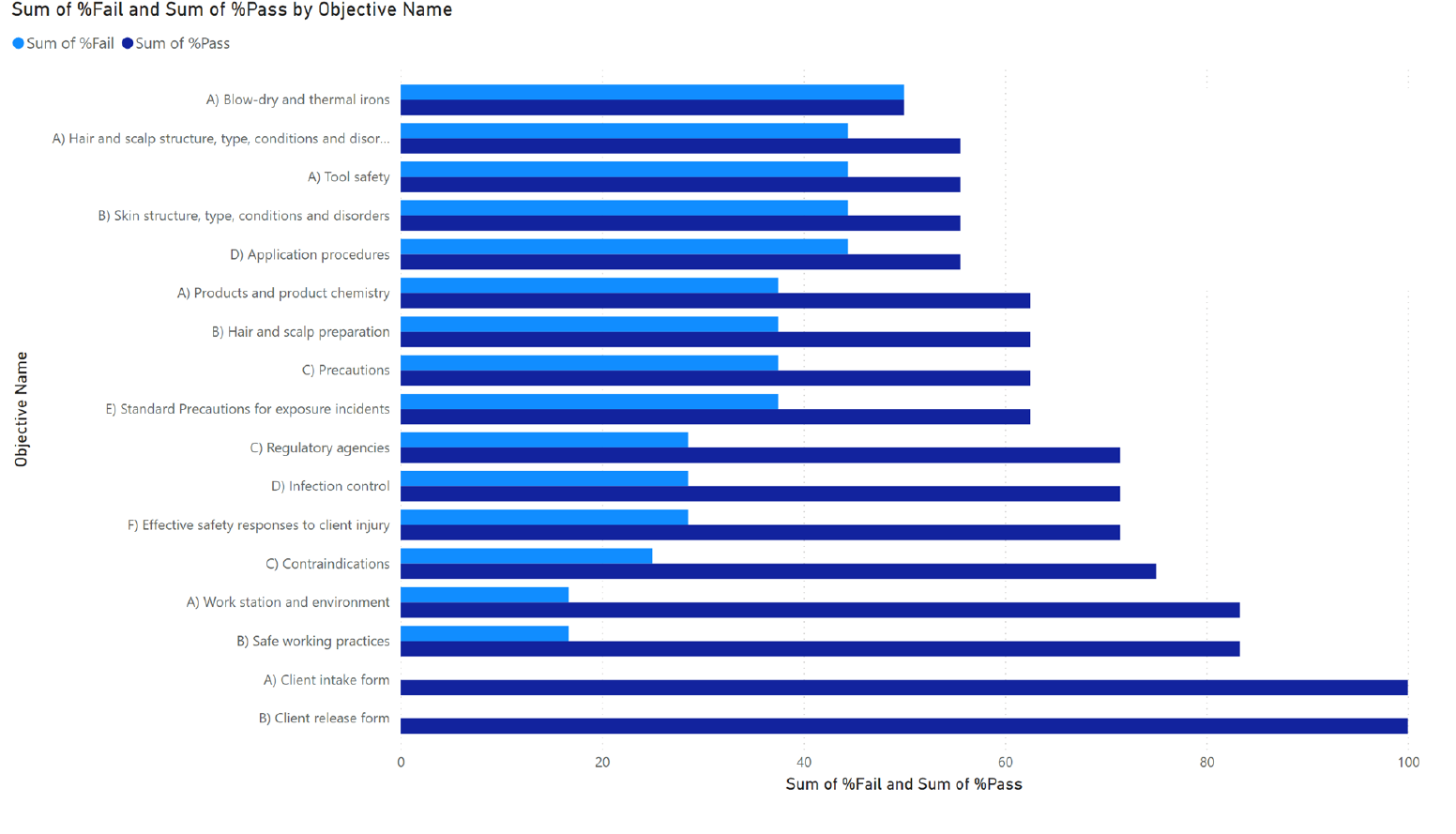
The instructor already had “a feeling” about which topics were hard. The dashboard confirmed some of it and surprised us on the rest. Blow-drying and thermal tools were the weakest objective at 50%, and several questions had a 0% pass rate. Client documentation and salon safety were at or near 100%.
We agreed on three changes:
- Small-group review sessions focused on the lowest-scoring objectives.
- Three extra instructional days on blow-drying and thermal tools, taken from objectives already above 80%.
- Short Gmetrix check-ins (5–10 questions per sub-objective) after each Canvas module, with the dashboard refreshed and reviewed together every two weeks.
The longer goal is for the instructor to run the dashboard herself.
A same-day fix for EPA 608 prep
I observed an HVAC class preparing for the EPA 608 certification on a vendor LMS. The content was good, but the platform didn’t connect to Canvas, gave the instructor no way to monitor progress, and was hard for students to find their way into.
My written follow-up that afternoon had three parts:
- Change: Use a Canvas course as the launch point for the vendor platform, with Canvas assignments that mirror the vendor’s knowledge checks so progress is visible.
- Timeline: I build the Canvas shell with example assignments by end of day. The instructor adds the rest with due dates by Friday. Students start using it Monday.
- Expected outcome: Students actively working through the course instead of passively clicking, and a first-time pass rate of 75% or better, above the 70% the vendor reports for its curriculum alone.
The instructor then built out his own Canvas module from the example, and one student’s first practice test through the new course came back at 89%.
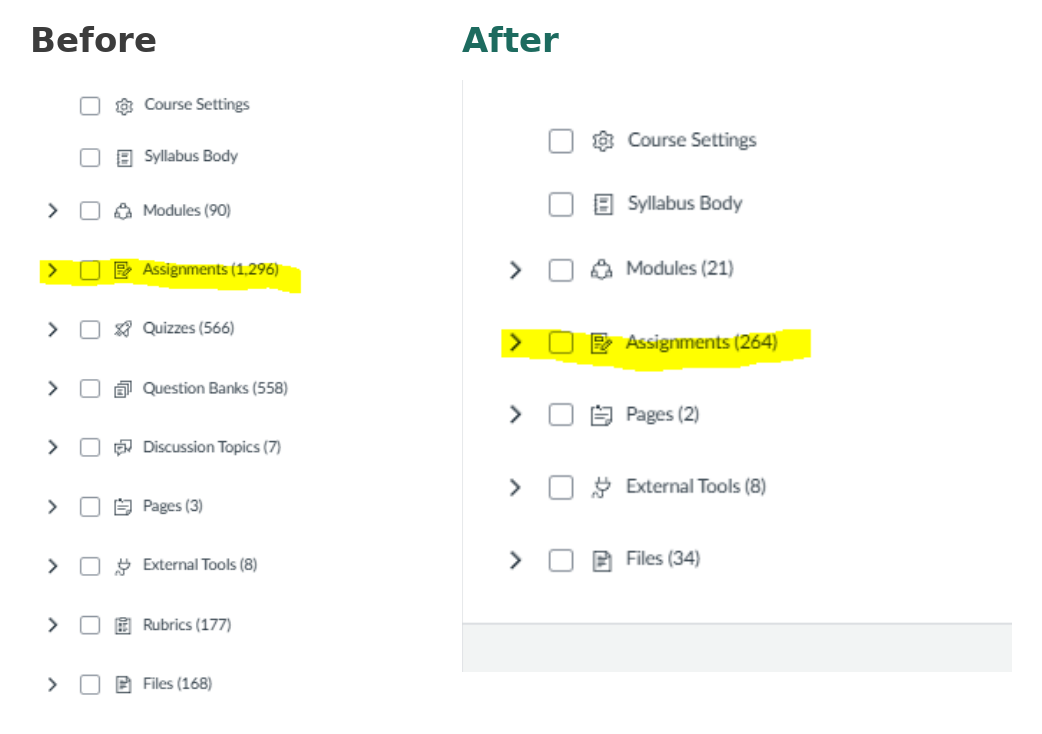
Cutting a course from 1,296 assignments to 264
Two heavy equipment instructors on two campuses were working from Canvas courses built around cohorts, not the state curriculum framework. An assistant director raised two problems: dual-enrollment grades weren’t transparent to students’ home high schools, and paper task sheets weren’t being used well.
Working with both instructors, we:
- Rebuilt the courses around the Florida DOE framework’s occupational completion points, so dual-enrollment grades now report against state milestones.
- Used differentiated due dates instead of duplicate courses for each cohort.
- Cut the course from 1,296 assignments to 264, which made it navigable for students and manageable for the instructors.
- Replaced print-and-scan task sheets with versions students can annotate directly in Canvas.
- Added case studies on who works in diesel and heavy equipment trades, written for students who don’t see themselves in the field yet.
A certification PLC
I led a professional learning community on credentials, certifications and licensure. A small core group met weekly in person, and other staff joined as needed to give input. We worked through the state’s CAPE funding list to find certifications programs weren’t yet offering, met with vendors about new exams, and simplified the paperwork instructors submit when a student certifies.
Campus-wide, industry certifications at iTECH went from 69 in 2023–24 to 235 in 2024–25, according to our student information system. In the heavy equipment program on our Glades campus, ASE certifications went from zero to 23 in one year.
Professional learning I designed
- Interactive displays: Two sessions for post-secondary teachers and coach leads (90 and 60 minutes) using rotation stations, a live “fishbowl” demonstration, and a structured four-part debrief. All 20 participants who completed the evaluation agreed the content applied to their role.
- “The Data Driven Instructor”: A monthly newsletter on Canvas analytics, Power BI, and digital formative assessment. Instructors wrote back that the step-by-step directions were what finally let them use tools they’d been struggling with.
- AI at the spring advisory meeting: Our institutional vision for AI, presented to instructors, administrators and business partners, including a discussion of why different generations of students and workers resist AI and how instructors can answer those concerns with industry examples of AI supporting skilled workers rather than replacing them.
What I learned
- Put the plan in writing. A follow-up that names the change, the deadline and the expected result gives both of us something to check against.
- Build the first piece, then hand it over. An example Canvas module was easier for the HVAC instructor to extend than a description of one.
- Teachers trust data they can see themselves. The cosmetology dashboard moved the conversation from a feeling about hard topics to specific objectives and questions.
- Most of coaching is follow-up. The second email and the two-week check-in are where changes actually stick.
The toolkit
The templates and process behind these cycles are open for any CTE coach or teacher leader to use: a coaching follow-up email, a data coaching protocol, a feedback-methods guide, a PD session plan, a teacher newsletter, and a guide to organizing certification evidence.
github.com/amymcmullin/instructional-coaching-toolkit
This write-up was drafted with AI assistance from my ISTE submissions and notes. The coaching work, materials and decisions described here are mine.